

Hi, hello, welcome. This is overkill digest, a newsletter on stuff. Mostly tech stuff. And gaming stuff. Sometimes also other stuff.
But especially today, it's about Valve stuff. So let's get right into it, because there is a lot to digest (heh, see what I did there?!):
🚀 Big Moves
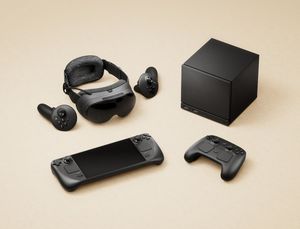
Valve is entering the console wars. And the VR wars, I guess.
We're getting three new products in Q1 of 2026:
- The Steam Machine: A compact living room PC built for SteamOS with upgraded thermals and 6x the power of the Steam Deck.
- The Steam Controller: A redesigned game controller mixing Steam Deck-like trackpads with traditional inputs.
- The Steam Frame: A Snapdragon-based VR headset based on SteamOS with that runs standalone or hooked up to a PC.
All three devices are incredibly exciting for different reasons.
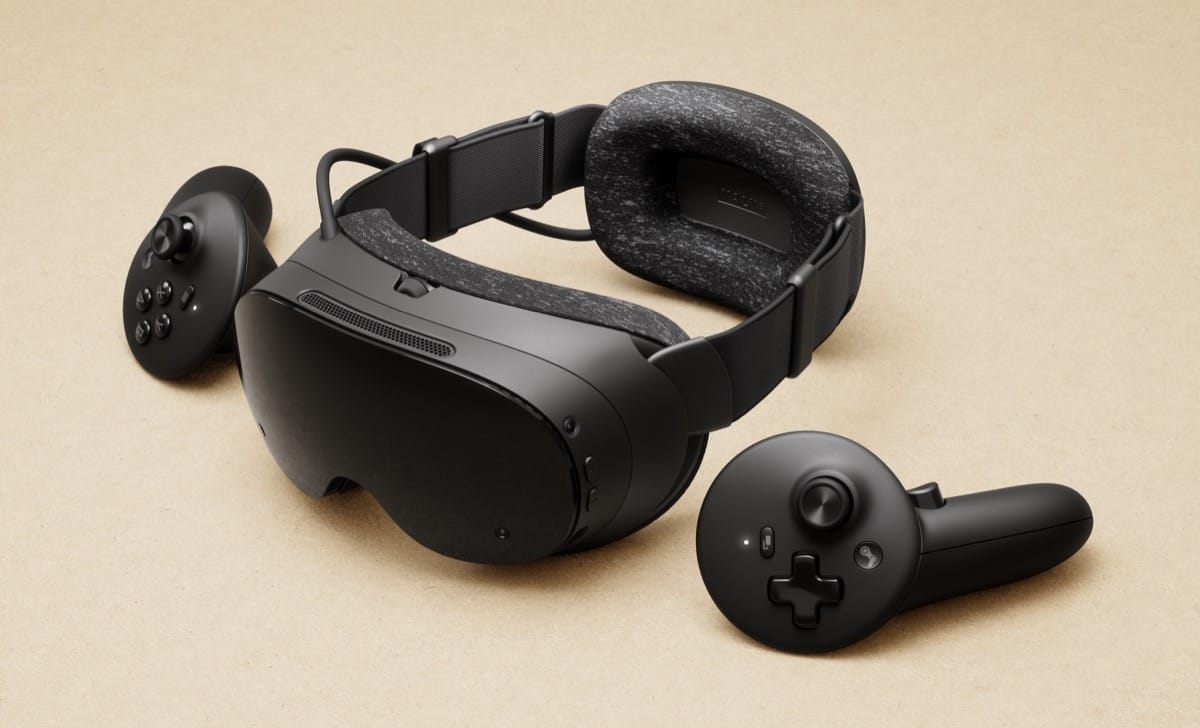
The Steam Frame is Valve's successor to the Index and works both as a standalone VR headset running SteamOS on a Snapdragon chip and as a PC headset thanks to a new dongle and some clever tech.
For the standalone part, Valve has co-developed FEX (or sponsored, I'm not quite sure), an x86-to-ARM emulator. This basically allows games developed for a PC architecture to run on ARM processors. (And I'm expecting that this will help other devs port more x86 games to Android-based handhelds. For example, I currently play Hades II on my AYN Thor via GameNative.)
And since it uses a Snapdragon 8 Gen 3 chip, Valve has also confirmed that you'll be able to install and sideload Android apps. So basically, Proton makes Windows games run on Linux, and FEX makes PC games run on “mobile” chips.
When you hook up the Steam Frame to a PC, you rely on a “high-bandwidth wireless dongle,” and Valve built a technique called “foveated streaming” specifically for that link.
If you're familiar with VR-tech, you might have heard of “foveated rendering”. Instead of rendering the entire scene at the same quality, it relies on eye tracking, so whatever you're looking at stays pristine and your peripheral vision gets a lower resolution for better performance.
“Foveated streaming” follows the same idea by streaming only the part you're looking at in the highest resolution, while everything else gets a softer stream. It sounds wild, and I suggest you check out this time-stamped clip.
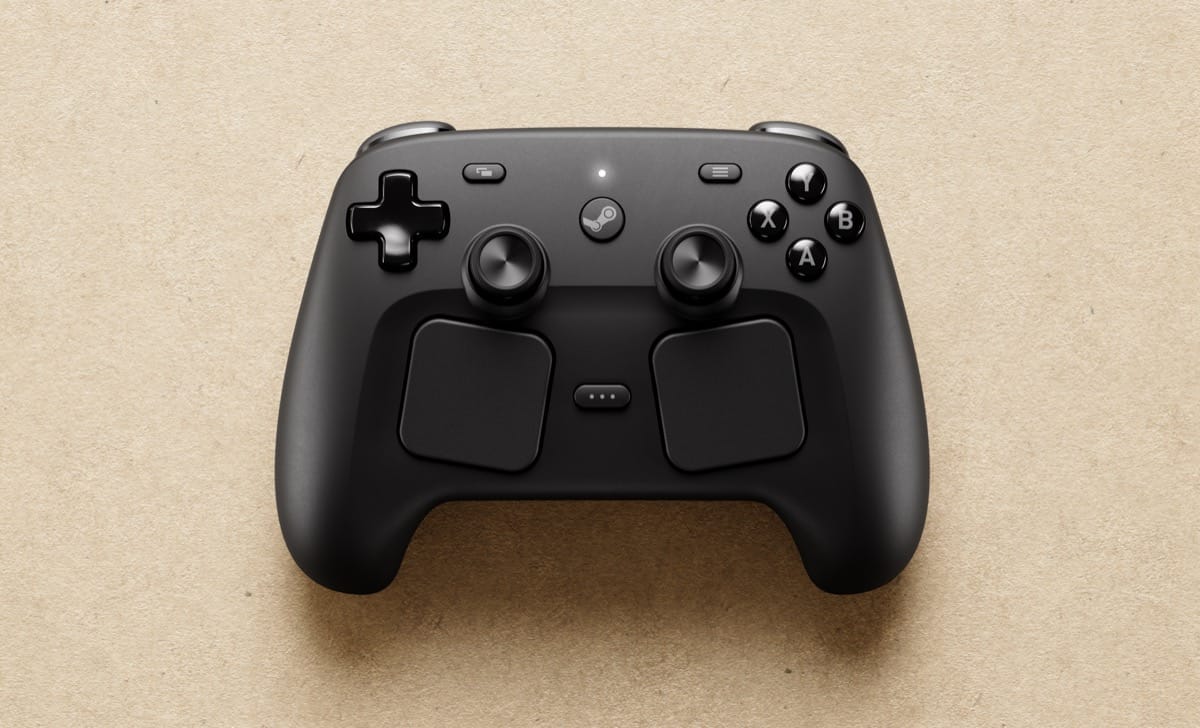
Next up, the Steam Controller. This is Valve's second iteration, and they clearly learned a lot from the Steam Deck. It basically looks as if you took a Steam Deck, removed the screen and put the two ends together. Valve then added magnetic, drift-resistant sticks (so-called TMR electromagnetic joysticks), and capacitive sensors inside each grip. So the controller knows how you're holding each grip, allowing for more customization. From The Verge:
Valve calls this virtual button “Grip Sense,” and you can map anything to it, but the feature was originally suggested by a Valve employee who wanted a way to activate gyro aiming without moving their thumbs.
The Steam Controller also comes with a (magnetic) charging puck that doubles as a wireless emitter and supports up to four controllers at once. And according to Valve, the battery life holds for 35 hours.
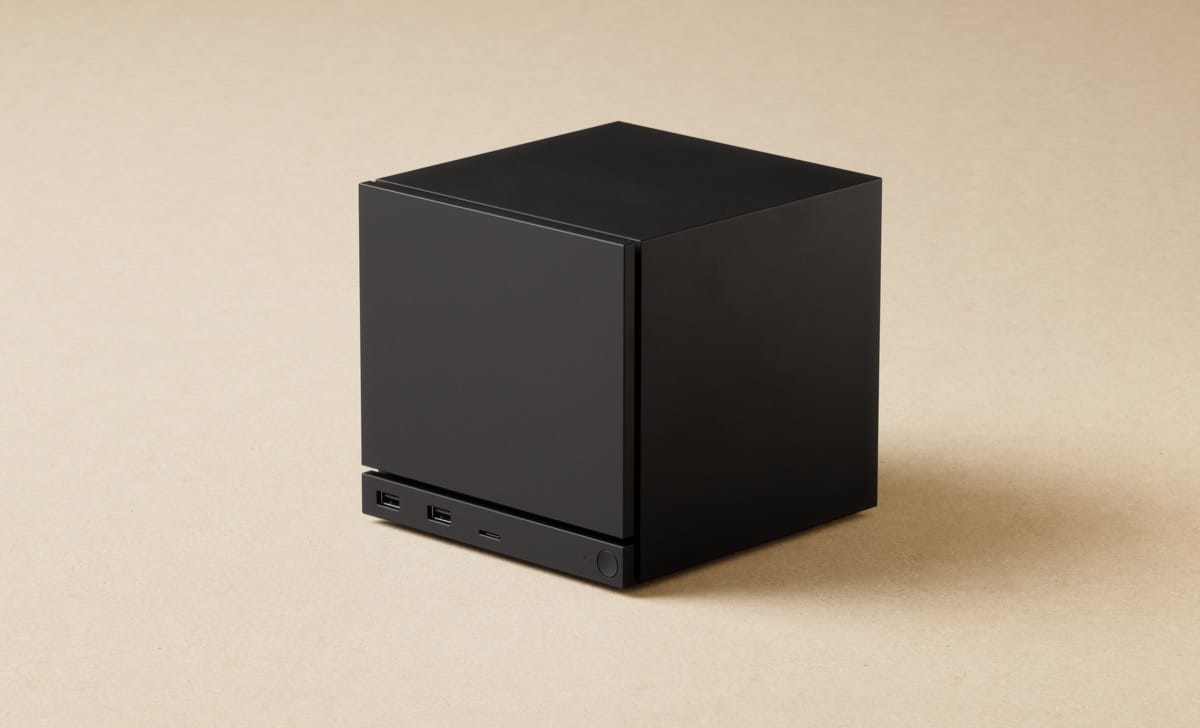
Finally, there's the Steam Machine. It's a 6-inch cube powered by an AMD Zen 4 6-core / 12-thread CPU and a discrete RDNA3 GPU with 8 GB of VRAM (unlike the Steam Deck, it uses two chips), capable of 4K gaming at 60 FPS with FSR. Performance-wise, it should be somewhere between the Xbox Series S and the PlayStation 5.
Digital Foundry saw performance around RTX 3060 / 4060 territory, though they are skeptical about Valve's claim that the Steam Machine is a “4K 60 machine with FSR”, especially due to the 8 GB of VRAM.
It comes with 16 gig of memory (expandable, it takes SO-DIMM), plus either a 512 GB or a 2 TB internal SSD (it's a 2230 like the Steam Deck, though you can add a full-sized 2280 yourself). The Steam Machine even has a built-in antenna for the Steam Controller, so you don't need to rely on the aforementioned puck.
Ports-wise, the back gives you HDMI 2.0, DisplayPort 1.4, Gigabit Ethernet, two USB-A ports, a 10Gbps USB‑C port and the power connector. Up front, you get two more USB-A ports and a microSD slot that can ingest the card from your Steam Deck and instantly find all your installed games.
There's also a fancy front LED light you could map to show, say, the download progress of a game. You can customize the front panel too, and obviously dbrand is already working on something else.
Out of all the announcements, the Steam Machine grabs me the most, even though I'm planning to buy the whole trio. Bringing SteamOS to a console-like PC you can drop under a TV or a monitor might actually be a game-changer.
Sure, the obvious audience is people with Steam libraries, but Microsoft is the one that should feel the heat here. They've been trying to build a hybrid console/PC experience that runs Windows and plays everything, yet they've struggled to stick the landing (I'm publishing my XBOX ROG ALLY X review tomorrow, where you'll learn more).
And here comes Valve to announce exactly that. SteamOS still runs into the same anti-cheat issues (maybe a popular Steam Machine nudges devs to fix it), but most games work straight away. Also, the Steam Machine looks like an Xbox Series X sliced in half, which is objectively funny.
The biggest question around all three boxes is availability and price. We don't know when anything will launch, or how much cash Valve will ask for, but they have dropped a few hints.
For example, they aim to launch the Steam Frame below the price of the Index. The Index came either standalone at $499 or in a bundle at $999, so which price is Valve talking about here?
As for the Steam Machine, Valve told several outlets they plan to price this more like a PC than a console, which sounds like they're not going to subsidize the hardware despite taking 30% from every Steam sale. With the performance they're claiming, and what Digital Foundry mentioned above, I can't see this thing costing much more than the priciest Steam Deck.
So here are my price guesses with zero insider information: Steam Controller at $89, Steam Machine starting at $599, and Steam Frame at $799. Whatever the final numbers are, I'm buying all of it, because of course I will.
🎮 Platform Updates
Nintendo launched a Switch 2 compatibility page. This is honestly super handy. Type in the name of the game, and the site will tell you if the Switch game is compatible with the Switch 2. This search functionality even covers apps like Netflix.
I tried to find unsupported games, and so far the only one I could dig up is NieR:Automata.
💻 Hardware & Software
Sony will release a PlayStation Monitor. 27-inch, 2560×1440, HDR with auto tone mapping, VRR up to 120Hz on PS5 (and 240Hz on PC/Mac), two HDMI ports, one DisplayPort, USB‑C, two USB‑A, 3.5 mm audio jack, built-in stereo speakers, and a charging thing for the DualSense controller. It lands in 2026, though there's still no price.
🎲 Playthings
Sony is making a Horizon MMORPG. The free-to-play game is called Horizon Steel Frontiers and is coming to PC, iOS and Android. It's developed in collaboration with Korean video game company NCSoft.
The mobile angle makes it sound like a cash-grab to me.
We're getting an HD Reworked update for The Witcher 3 Next-Gen. The original version of this mod was so good, CD Projekt Red added it officially to the Next-Gen update. Now modder Halk Hogan is back and working on an HD Reworked version for the Next-Gen, basically improving on his own work. The update is slated for 2026, and 2026 is when I'll play The Witcher 3 again, it seems.
Red Dead Redemption is coming to mobile thanks to Netflix. It'll launch in early December and will be “free” for Netflix subscribers.
I am not quite sure who would want to play this game on a smartphone, but I guess now you can? Though, on that day, you'll also be able to play Red Dead Redemption on the Switch 2.
Arc Raiders sold 4 million copies in 2 weeks and hit 700,000 concurrent players across all platforms last weekend.
What I find interesting is that on Steam, the peak of concurrent players during that weekend was around 460,000. That gap shows how many people are playing on PC compared to other platforms. It runs great on Steam Deck, too, so maybe that's one reason.
📌 Quick Hits
- dbrand's Black Friday sale started early. More importantly, you get a set of free playing cards with every order. I love fancy, high-quality playing cards, so I got a set. Oh, and the deals are good, too.
- Apple made a purse? It's basically a cross-body sock for your iPhone. I'm apparently way too unfashionable to understand who this is for, especially since it's sold out already.
- The Analogue 3D finally has a shipping date. Analogue's Nintendo 64 clone starts shipping in two days, after several delays.
Dig the format? Hate it? Hit those feedback buttons below and let me know what's working.
🔮 Looking Ahead
- Kirby Air Riders is coming to Switch 2 on November 20.
Ok, that's all. Thanks for reading!
See you,
Kevin